How to make a weekly meal plan for your family (in 15 minutes)
A simple way to plan a week of family dinners in about 15 minutes: check what you have, pick a few favourites, and write one shopping list by aisle.
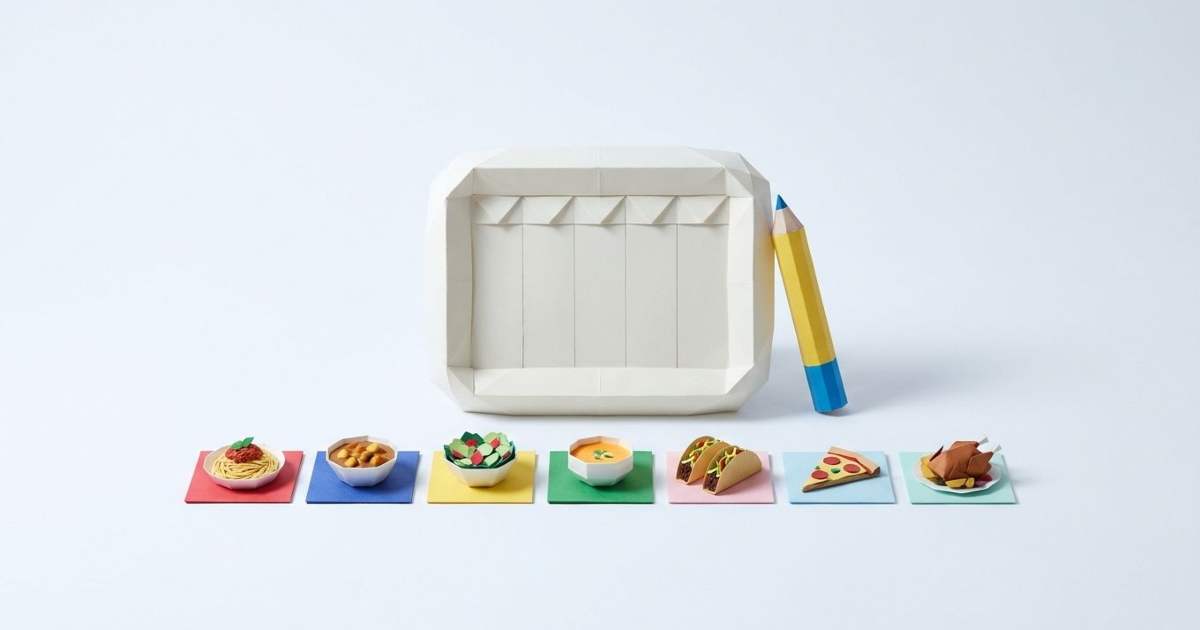
Most of us can cook dinner. The tiring part is deciding what it should be, every single night, usually at about half five with someone asking if it's ready yet.
A weekly meal plan moves that decision to one moment in the week. You sit down once, make the calls, and the rest of the week is just cooking. Here's a simple way to do it in about fifteen minutes.
Why plan the week at all
Planning a week of family dinners sounds like more work. In practice it's less, because you swap seven small decisions for one bigger one.
It also means one proper shop instead of three quick dashes, fewer "we've got nothing in" evenings, and less food going in the bin, because you're buying for meals you've already chosen.
None of this needs to be perfect. A plan you follow four nights out of five is still doing its job.
Stuck on tonight? Here are some quick ideas for what to have for dinner.
Before you start: two things to have ready
First, a list of ten dinners your family will actually eat. Spaghetti bolognese, fajitas, a traybake, fish fingers and peas. This list is your safety net on busy weeks.
Second, somewhere to write the plan. The notes app on your phone works. So does the back of an envelope. If you'd like something to stick on the fridge, our free weekly meal planner has the week down one side and a shopping list sorted by aisle on the other.
The 15-minute weekly meal plan
1. Look at the week ahead (about 2 minutes)
Start with the calendar. Which nights are late? Who's out at football or swimming? Is anyone away?
Mark the busy nights first. Those get the quickest dinners. The night you're home early is the one for something slower.
2. Check what you already have (about 3 minutes)
Open the fridge, the freezer and the cupboard. Look for anything that needs using up: half a bag of spinach, a pack of chicken thighs, the end of a bag of rice.
Plan Monday and Tuesday around those. It's the easiest way to waste less, and it shortens your shopping list before you've even started it.
3. Pick your anchor meals (about 5 minutes)
Choose three or four dinners from your list of ten. These are your anchors: meals you know work and everyone will eat.
Then fill the gaps with quick wins, like a stir-fry, omelettes, jacket potatoes or a simple pasta. Nobody needs seven new recipes in a week. One new thing is plenty, and only if you fancy it. If your new ideas live in a folder of saved recipes, here's how to actually cook them.
It also helps to plan one leftover night. Cook a bit extra on Sunday or Monday and eat it again midweek. It's the easiest dinner you'll make all week.
4. Write one shopping list, by aisle (about 5 minutes)
Go through each dinner and write down what you're missing. Group it the way your supermarket is laid out: fruit and veg, meat and fish, dairy and eggs, tins and dry goods, frozen, bakery, household.
You'll shop faster and forget less, and you won't double back across the shop for the one onion you missed. Check the spice cupboard before you add spices. Most of us own three jars of cumin.
Planning with children
Children are much more likely to eat a meal they helped choose. A few things that make family meal planning easier:
- Give each child one pick a week. It's their night. You'll hear fewer complaints, even on the nights that aren't theirs.
- Cook one meal and adjust it. Set some plain pasta aside before the sauce goes on, or serve the parts separately for a fussy eater. Cooking two dinners every night wears anyone down.
- Put the plan where everyone can see it. On the fridge, it answers "what's for tea?" before anyone asks.
- Let older children help with the list. Reading out the week's meals while someone else checks the cupboards takes a few minutes and teaches them how a week of food comes together.
Keeping it going, week after week
The second week is easier than the first. Keep last week's plan and reuse the parts that worked. Over time you'll build a rotation of two or three weekly plans you can swap between without thinking.
If a night goes wrong, swap the day rather than dropping the meal. Wednesday's curry can happen on Thursday. The ingredients will usually keep.
And if a week falls apart completely, go back to your list of ten. That's what it's for.
When the paper plan stops being enough
We built Preptable because our own kitchen was chaos.
Preptable is a UK meal-planning app, launching soon. You save recipes you already like, from a link, a photo or your own collection, and it turns them into a weekly plan and a shopping list sorted by aisle. It balances quick and slower meals across the week and spots ingredients you've already listed, so you don't buy the same thing twice.
The first 150 people to sign up become Founding Members, with £4.99 a month locked in for as long as you stay, or £39 once for life. Claim your founding spot to be the first to try it.
Questions
How many meals should I plan? Start with dinners on weekdays, five or six a week. Leave one night free for leftovers, a takeaway or whatever's in the freezer. Add lunches later if you want to.
What if our plans change halfway through the week? Move meals between days rather than cancelling them. Think of the plan as a list of dinners you have the ingredients for, in roughly the right order.
Does meal planning save money? It can, because you buy for meals you've chosen rather than picking things up as you go, and you use up what's already in the fridge. How much depends on how you shop now.
Do I need an app to meal plan? No. Pen and paper works well, and our free weekly meal planner gives you a ready-made page. An app helps when you'd rather not write it out every week.